Back to: ASIS CPP preparation course
0
Lesson 1.2: Security Theory & Process
Goal: To apply criminological theory and environmental design to prevent security incidents before they occur.

Learning Objectives:
- Explain the Crime Triangle and how security measures disrupt it.
- Apply CPTED (Crime Prevention Through Environmental Design) principles.
- Understand the WAECUP model of security goals.
Key Terms:
- Target Hardening: Strengthening the security of a building or installation to deter attack.
- Defensible Space: Designing an environment so that residents/users can control it.
Core Content:
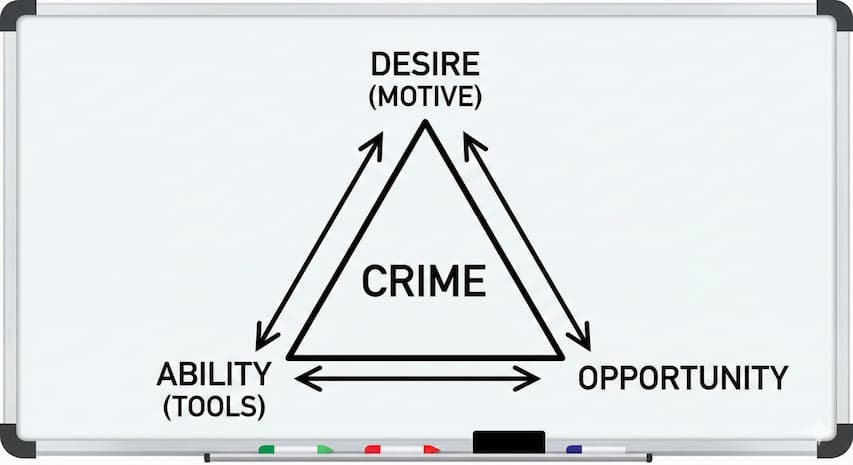
- The Crime Triangle:
- For a crime to occur, three elements must converge:
- Motive/Desire (The criminal’s intent).
- Ability/Tools (The criminal’s capability).
- Opportunity (The vulnerability/lack of surveillance).
- Security Strategy: Security professionals generally cannot control Motive. We focus on removing Opportunity and limiting Ability.
- For a crime to occur, three elements must converge:
- CPTED (Crime Prevention Through Environmental Design):
- Natural Surveillance: Keeping lines of sight open (e.g., low hedges, windows facing streets) so intruders feel watched.
- Natural Access Control: Guiding people to entrances via landscaping and paths.
- Territorial Reinforcement: Using distinct paving, fences, or art to define ownership (“This is private space”).
- Maintenance: A well-maintained property signals that people care and are watching (Broken Windows Theory).
- The WAECUP Model (Goals of Security):
- Waste avoidance.
- Accident prevention.
- Error reduction.
- Crime prevention.
- Unethical practice deterrence.